FAQ discussion guide
This guide helps answer common questions and address misconceptions that may prevent people from considering clinical trial participation.

Clinical Trials


Representation in clinical trials matters. It’s critical to enroll a broad and varied community of people in clinical trials, including individuals from groups whose access to clinical trials has historically been limited. Let’s Talk Why representation matters, Let’s Talk How trust is built and Let’s Talk Trials together.
Discover how we’re helping to reshape clinical research through trust, representation and conversations.

Clinical trials help researchers learn how our bodies respond to medicines and other treatments. They test new ways to help prevent, find, diagnose or treat diseases and whether investigational treatments or new uses for existing treatments are safe and work well. Yet many people may not fully understand how clinical trials work or the role they can play. Taking part in clinical trials helps drive the research and development of investigational medicines.
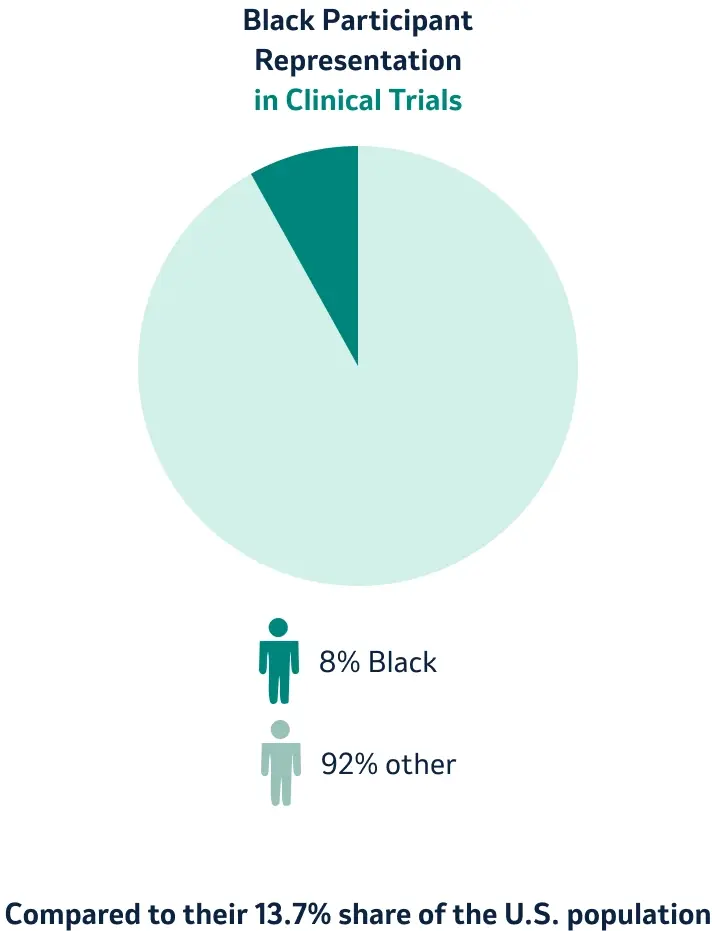
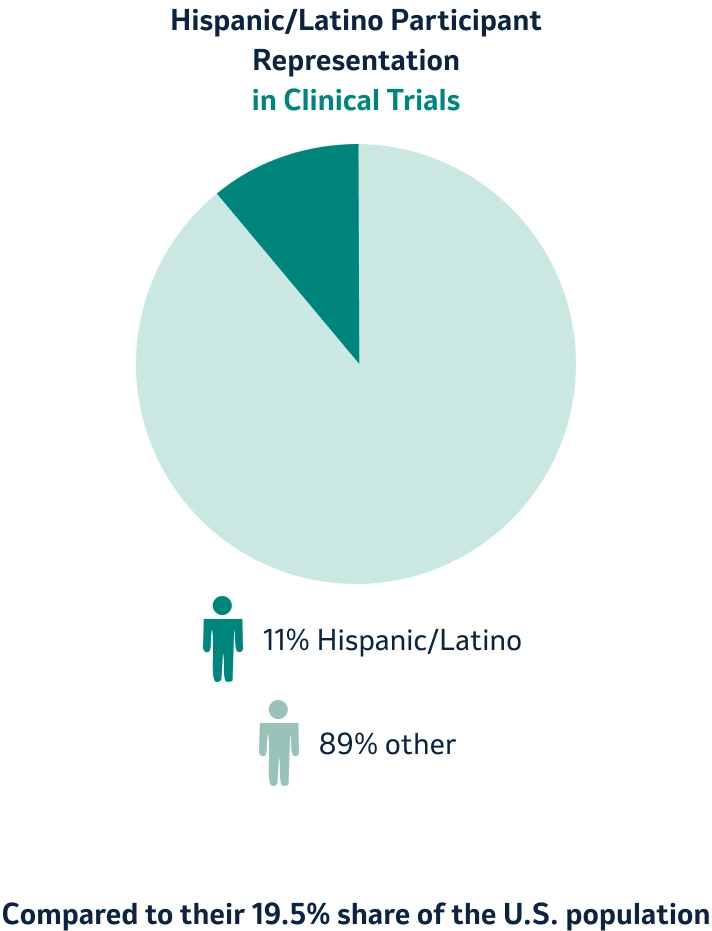
Diseases can impact people differently based on their age, gender, weight, race, ethnicity and other factors. That’s why it’s important for clinical trials to include people from a wide variety of backgrounds. Representation in clinical trials helps researchers gain a more complete picture of how investigational medicines work across populations. Yet, only 24% of clinical trial participants are from communities of color, despite making up more than 40% of the U.S. population and facing higher burdens of many diseases. For these specific communities:
Explore tools and resources designed to support conversations about clinical trial participation.
This guide helps answer common questions and address misconceptions that may prevent people from considering clinical trial participation.
This brochure breaks down what clinical trials are, how they work and why clinical trial participants should represent people impacted by the disease.
This infographic helps address myths about clinical trials with facts.
Join us in a conversation. Let’s help create a future of healthcare that’s inclusive and representative of all communities.
To learn more about clinical trials, please contact our clinical trial information center at 1-888-577-8839.